3D Industrial Rendering: Use Cases and Benefits for Industrial Projects
Industrial projects have always been defined by complexity. Whether it’s a refinery filled with interconnected systems, a solar farm stretching across vast terrain, or a logistics hub packed with heavy equipment and machinery, the challenge isn’t just designing these environments—it’s making them understandable. Over the past decade, 3D industrial rendering has moved from being a “nice-to-have” visualization layer to a core part of how teams communicate, validate, and deliver industrial projects.
At Omegarender, we don’t see 3D industrial rendering as decoration or marketing polish. A 3D industrial plant rendering is closer to a working interface between disciplines—a way to translate dense BIM data into visuals that engineers, contractors, investors, and stakeholders can actually interpret. Much like a model on paper can’t fully convey how a facility will function in reality, raw BIM environments often fall short when it comes to clarity, especially when multiple teams are involved in an intricate game of jockeying for coordination.
There’s also been a noticeable shift in expectations. The XXI century saw the impulse toward more visual, data-driven decision-making, and in the wake of the vast proliferation of digital tools, static drawings alone are no longer enough. Teams now rely on renderings to evaluate how systems will interact, how machinery will be installed, and how entire facilities—whether a wind farm, processing plant, or industrial complex—will come together before a single component is built.
On the other hand, the field of industrial rendering itself is developing along with technology. With real-time engines, automation software, and more efficient work processes, the creation of visualizations has become faster, yet the ultimate aim has remained unchanged: accuracy. Rendering should serve decision-making. It helps teams understand how something would form in the real world, under real constraints, with real consequences.
In this article, we’ll explore how 3D industrial rendering is used across industries—from large-scale infrastructure to energy and manufacturing—how BIM and VDC teams integrate it into their workflows, and what tangible benefits it brings to industrial projects at every stage.
3D Industrial Rendering For BIM And VDC Managers
What is 3D industrial rendering? It is a visualization process aimed at converting complicated BIM or VDC models into visually appealing images of industrial facilities. Nowadays, many BIM and VDC managers working in plant design and construction are turning to the service of producing high-quality 3D renderings for a variety of reasons. As the modern architecture, engineering, and construction industries become more complex, BIM models get denser and harder to analyze, even for multidisciplinary and technically proficient teams. BIM is rich in parametric data, which is great for analysis but not for making visual decisions. What's the solution?
To put it simply, the 3D industrial rendering converts a model into an environment for action. Architectural visualization helps provide a clear vision of the manufacturing facilities under design and engineering development. In case you need to know how it will operate and what it will look like once it is constructed. Read more on 3D exterior rendering services.
3D visualization for industrial facilities seized the lead from physical handmade models and 2D illustrations with the vast proliferation of digital technologies in the 21st century. This lead was largely driven by the pursuit of quickness, accuracy, and clarity. And here is where your need for 3D rendering begins. Now, it is considered the standard approach to visualizing and analyzing BIM and VDC models within the AEC industry. This way, the ambiguity is avoided, and the project timelines are accelerated.
As for BIM and VDC managers, 3D rendering is a good addition to the following processes:
- Coordination meetings with the team
- Clash resolution
- Communicating with executives and other stakeholders who do not have experience in working with models and BIM
- Making sure that the facility will work properly
With all the advancements in BIM tools, producing models was no longer a problem. The issue was that they had to be converted into images and diagrams understandable to decision-makers. So now, 3D rendering has become the key tool in this regard, helping project managers and BIM coordinators get rid of complications arising from complex 3D models.
Discuss your industrial project visualization with our team
Use Cases of 3D Industrial Rendering For BIM / VDC Coordination Across Industries
Every industrial project requires extensive BIM/VDC model coordination, which is why 3D renderings are widely used. They cover all the stages of project development, including:
- Early optioneering
- Design reviews
- Constructability checks
- Logistics and phasing analysis
- Stakeholder communication
- Tenders
Industry cases of 3D renderings include:
3D Visualizations for Mining Site and Extraction Operation
Mining projects cover large territories and feature various mining operations. To coordinate such a facility, renderings of the following elements are produced:
- Excavation zones
- Equipment placement
- Impact on nature
- Plans for restoration of the site
These renderings are often needed for regulatory approval and public communication.
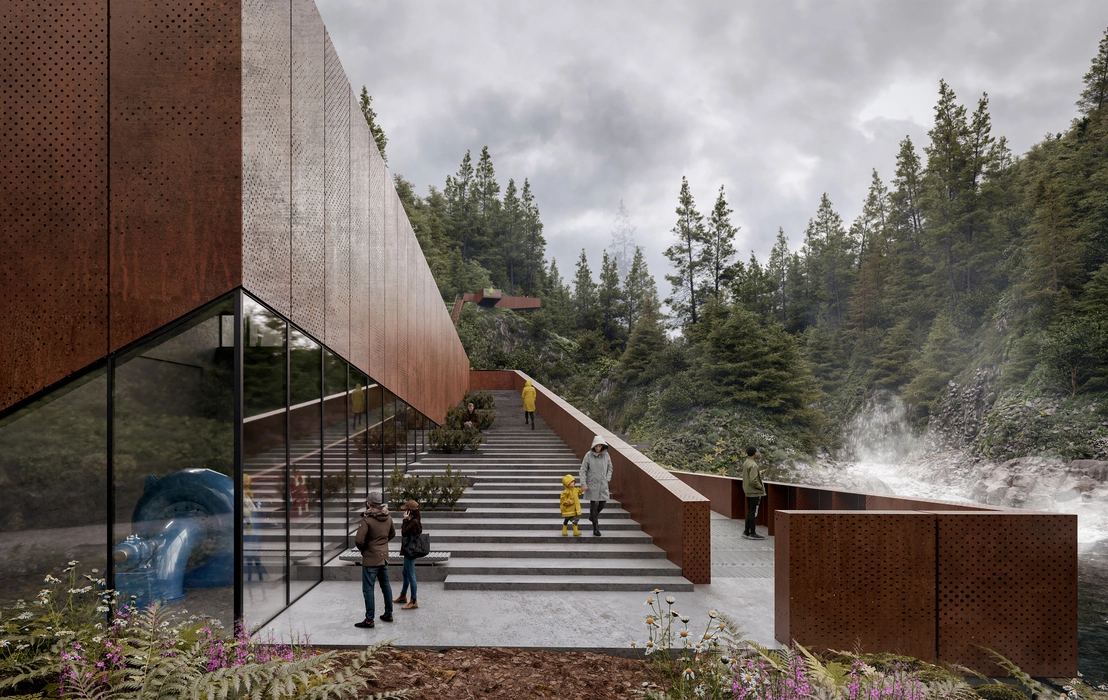
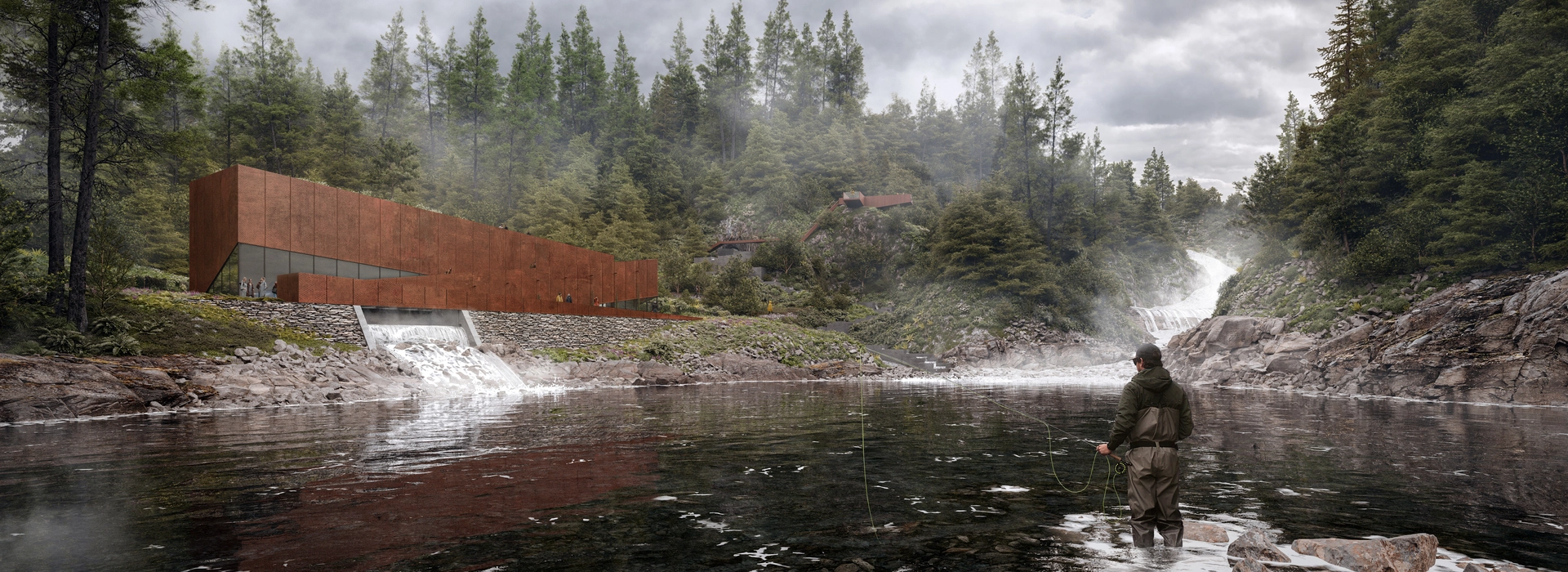
3D Renderings of Dams, Bridges, and Reservoirs
When you work on industrial architecture and infrastructure constructions, you need to make sure that the whole process follows your initial plan. This is where rendering comes into play: In this case, rendering helps:
- Visualize how the construction will fit into the landscape
- Check flood levels and water flows
- Discuss the plan and idea with stakeholders (especially government officials)
Visualization will normally be required when presenting to both the community and regulatory authorities.
3D Visualization in the Oil & Gas Industry
This type of project involves an extensive amount of equipment and intricate piping systems. Renderings can visualize the following:
- Pipeline arrangements
- Hazard zones
- Maintenance operations
- Fulfillment hub
Any error made at the early design phase of these facilities may become dangerous later.
3D Renderings for Piping Systems, Equipment Placement, and Logistics
When it comes to VDC management, this type of rendering is probably one of the most useful ones. It shows:
- Installation sequence
- Crane operations and logistics
- Efficiency of equipment operation
This visualization allows making sure that everything will work well.
Architectural 3D Visualizations for Manufacturing Complexes
Manufacturing plants include a lot of systems that should be connected in a specific way. 3D renderings help:
- Optimize layout
- Increase production efficiency
- Communicate the design ideas to stakeholders
If you are also looking for something beyond static images, read about 3D architectural animation services.
3D Visualizations for Power Stations and Energy Projects
Large energy stations often comprise several stages of construction. Rendering can help visualize:
- Phasing strategy
- Renewable energy systems integration
- Investor presentations
3D Industrial Visuals for Port Terminals, Harbors, and Coastal Infrastructure
Port terminals and harbors are large-scale projects requiring complex coordination of land and marine parts of facilities. Visualizations help check:
- Cargo flow
- Docking zones
- Resilience of structures
Architectural 3D Visuals for Telecom Towers and Infrastructure
For this type of facility, visualization helps present:
- Coverage zones
- Placement and connection to the landscape
- Visual impact assessment
3D Visualization for Agricultural Lands, Farms, and Land Management Projects
When dealing with agricultural lands, renderings help:
- Plan the irrigation systems
- Plan the change in land use
- Communicate with investors and stakeholders
3D Industrial Process Rendering for Plant Upgrades and Reconfigurations
As brownfields are complicated projects, rendering helps:
- Integrate new equipment with old facilities
- Avoid clashes
- Plan upgrade and renovation procedures
Get expert 3D rendering support for your next project
Benefits of Using 3D Industrial Renderings
From the point of view of BIM managers and coordinators, there are some advantages of 3D renderings. They affect not only the visual aspect of a project but also other things.
Reduced Construction Costs
Cost reduction is another advantage of using 3D visualization software. The earlier issues are identified and corrected, the fewer problems occur later. In particular:
- Design errors can be found before construction begins
- Redesigning becomes cheaper
- Prototyping expenses are reduced
It's estimated that visual tools save up to millions in construction costs per year.
Accelerated Decision-Making
The advantage is that it takes much less time for stakeholders to accept project decisions when there are renderings. This is due to several reasons:
- It's easy to estimate the quality of the presented alternative
- Approval procedures become faster and easier
- Fewer revisions are required to be approved
This aspect is very important for any industrial facility being developed and built.
Increased Precision in Planning
Precision can be increased since 3D renders show:
- Reality-based details of the project
- Relationships between objects
- Clashes and problems
This aspect is helpful as it complements the data provided in BIM and VDC models.
Better Marketing and Presentation Results
When it comes to selling a project or attracting investments, 3D rendering helps marketers to:
- Produce appealing presentations
- Communicate the value of the construction
- Make a broader audience interested
Advanced visualization solutions are now capable of producing scalable renderings to match the project stage.
If you want eye-catching camera angles and marvelous shots, we can refer to our aerial 3D rendering services and 3D site plan rendering services.
Improved Collaboration Within Multidisciplinary BIM Team
Last but not least, 3D industrial rendering helps teams communicate with each other:
- Converting complicated model data into simple images
- Aligning everyone involved in the project to have the same understanding
- Minimizing errors and RFI
So what are the reasons to choose a dedicated studio?
Why Should BIM / VDC Managers Use Omegarender for 3D Industrial Renderings?
Nowadays, the AEC industry evolves fast and requires professionals to use advanced technologies. As for rendering services, not all of them can meet such demands. There are several features BIM managers should pay attention to:
- Ability to work with BIM models
- Understanding of industrial processes
- Flexibility and ability to support iterative projects
- Quality assurance
Omegarender offers the following advantages of commercial architectural 3D rendering services:
- Specialized skills in industrial visualization
- Possibility to work with BIM models directly
- Tight schedule management
- Consistent project results
We see ourselves more like partners in visualizations than vendors. That goes in tandem with the current trend in the industry regarding the use of advanced software for 3D visualizations.
Conclusion: How to Make Your Industrial Project Successful with 3D Renderings
Industrial project managers and coordinators need to deal with extremely complex models, which is why 3D industrial rendering became an important part of the design process. Renderings can significantly improve the results of coordination and planning. This technology helps save money, make decisions, and communicate effectively.
Partnering with Omegarender, you can focus on your tasks and responsibilities without worrying about visual aspects. We will help to coordinate the project effectively and to make it successful.
Are you searching for the most experienced and professional 3D rendering company? Then you are at the right place! Allow Omegarender to assist you with your BIM projects!
Start optimizing your BIM workflow with high-quality visuals
FAQ
Which types of industrial projects benefit most from 3D renderings?
Power plant, warehouse, oil and gas facility, pipeline, energy facility, infrastructure, and logistics are commonly regarded as optimal projects for industrial 3D rendering.
How can 3D industrial visualization reduce the project cost?
Rendering can help detect problems, which will eliminate unnecessary work and expenses.
What information and files do I need to provide to start an industrial rendering project?
Usually, BIM (Revit, Navisworks) models and CAD files, along with layout and requirements from the engineering teams.
How long does it typically take to produce a 3D rendering for an industrial facility?
The answer depends on the size and scope of your project and the desired quality of the rendering. Often, the duration varies from several days to several weeks.
How can 3D visualization be used for marketing purposes?
3D visuals help produce better presentations and to attract stakeholders.